
ADA Consulting Firm
Humanity Matters | Matters of Humanity
Where Humanity Leads and Justice Follows.
A quarterly publication from Humanity Consideration Consultants


February 2026
Civil Rights. Emotional Intelligence. Dignity in Action.

A Word from Our Founder
Greetings, Humanity Partners, Collaborators, Connectors, and Networkers,
February 2026 marks the official launch of Humanity Matters | Matters of Humanity, a quarterly newsletter from Humanity Consideration Consultants dedicated to civil rights, emotional intelligence, and dignity in action. Each issue reflects our commitment to honoring history, responding thoughtfully to present-day challenges, and amplifying voices that remind us that accessibility, justice, and humanity are inseparable.
As we observe Black History Month, we are reminded of landmark civil rights laws, including the Civil Rights Act of 1964, as amended, and the Americans with Disabilities Act of 1990, as amended. These foundational statutes, along with other federal civil rights laws that often intersect in practice, set clear expectations for equal opportunity and equal access to programs, services, employment, housing, education, and public life, while protecting the dignity and rights of every individual.
In this season, remembrance must also be accompanied by honest reflection.
Across our nation, we continue to witness situations that reveal gaps in duty of care, shortcomings in emotional intelligence, and decisions that overlook the humanity of vulnerable or marginalized individuals.
Equally concerning are the decisions we do not see, those made behind closed doors in boardrooms, detention facilities, workplaces, healthcare settings, classrooms, homes, and other environments where policy, culture, and leadership ultimately determine whether dignity is protected or denied.
Humanity Consideration Consultants provides training, technical assistance, and compliance reviews to help organizations strengthen humanity-centered practices, improve decision-making, and prevent harm before it occurs. In 2026, our work expanded to address the full spectrum of civil rights laws impacting employment, education, public services, housing, and access to programs and services.
I will continue to affirm a simple truth:
“If we focus on the people, the law will manifest itself.”
Thank you for being part of this community and for your commitment to advancing dignity, access, and humanity in every space you influence.
With purpose and gratitude,
Cheryl Ann Frazier
Founder and CEO
Humanity Consideration Consultants
A Legacy of Humanity: The Story Behind the Work

Left to right: Ralph D. Frazier, Cheryl Ann Frazier, and Ambassador Andrew Young, then Mayor-elect of Atlanta, Georgia (1981).
Photo courtesy of the Frazier family archives.
The photograph above captures the beginning of my life’s journey in a way words alone cannot. In it, I stand between my father and Mayor-elect Andrew Young at a school event at John F. Kennedy Middle School. That day, I had the honor of introducing Mr. Young as Atlanta’s next mayor. As my father and Mr. Young shared a handshake, one of my hands was held within theirs, my father’s other hand resting over it, and my other hand placed on top. At the time, I did not realize that this moment reflected an intentional expression of support and promise, laying the foundation for a life of service.
My father was a shoeshine man at the Atlanta airport, a crossroads of travel and transformation where civic leaders, public officials, and civil rights trailblazers regularly passed through. As a child, I often accompanied him to the airport, where I helped polish shoes, unaware of the path of service and social justice I would one day embrace. I witnessed service up close. History in the shine chair.
Mr. Andrew Young, Representative Tyrone Brooks, Reverend Jesse Jackson, and Reverend Ralph David Abernathy became part of my world. My father turned ordinary spaces into extraordinary classrooms where I had a front row seat.
“A child must learn early to believe that she is somebody worthwhile, and that she can do many praiseworthy things.”
— Dr. Benjamin Elijah Mays
When Systems Fail: Seeing the Human Impact
Across the nation, recent incidents remind us that when systems lack awareness, preparation, or accountability, the consequences for people with disabilities can be profound and, at times, life threatening.
The following videos document real events that call us to reflection, learning, and renewed commitment to disability awareness, trauma-informed practice, and duty of care.
Federal Enforcement Encounter Raises Concerns About Disability Awareness and Appropriate Response
Content Advisory
The following testimony includes descriptions of physical force, emotional distress, and allegations of systemic breakdown. Viewer discretion is advised, particularly for those sensitive to trauma, injustice, or harm involving individuals with disabilities.
Incident Date and Location: January 13, 2026 – Minneapolis
Testimony: Washington, D.C.; February 3, 2026 (public congressional testimony)
Public testimony and video footage have raised serious concerns regarding the treatment of Ms. Aliya Rahman, an individual living with autism and a traumatic brain injury, during a federal enforcement encounter.
According to her testimony, Ms. Rahman was forcibly removed from her vehicle while attempting to comply with instructions as she was traveling to a medical appointment. The incident highlights the risks that arise when disability-related communication needs, cognitive processing differences, and medical vulnerabilities are not recognized or accommodated during high-stress enforcement situations.
This event underscores the need for:
-
Basic training
-
Disability awareness training
-
Recognition of non-visible disabilities
-
Trauma-informed communication and active listening
-
De-escalation techniques
-
Emotional intelligence in crisis response
Carbon Monoxide Tragedy Raises Duty-of-Care Questions
Content Advisory
This content discusses loss of life, potential neglect, and system failure. Viewer discretion is advised for those sensitive to topics involving death, disability vulnerability, or caregiver oversight concerns.
Location: West Valley City, Utah
Date: February 6, 2026
Authorities in West Valley City, Utah, reported that three adults with disabilities were found deceased following carbon monoxide exposure.
Investigators determined that a vehicle was left running inside an attached garage, contributing to the buildup of dangerous carbon monoxide levels within the closed area.
The individuals were reportedly under the care or supervision of a transportation service provider at the time of the incident. Authorities continue to investigate the full circumstances.
This tragedy raises serious concerns regarding:
-
Safety procedures
-
Disability awareness training
-
Emergency preparedness
-
Provider accountability in residential, community-based, and transportation services
Consider This:
While investigations and legal determinations are ongoing, situations like this raise important questions about potential legal protections that may be implicated, including:
-
The Americans with Disabilities Act (ADA) – Did the law enforcement official ensure effective communication? Did the individual request or need a reasonable modification? Does the encounter indicate discrimination or retaliation? Was there a lack of equal access to medical care services while the individual was in detention?
-
Fourth Amendment – Was there reasonable suspicion? Was there probable cause? Was the Use of Force “objectively reasonable” or “excessive?”
-
Federal Agency Use of Force Policy – Was the policy adhered to by the federal agency’s protocol and required training? Was the Use of Force necessary? Was there resistance? If so, did the resistance cease during the encounter?
Consider This:
While the investigation is ongoing and an arrest has been made, incidents of this nature may raise questions about possible legal and regulatory responsibilities, including:
-
Americans with Disabilities Act (ADA) – Were the services provided by private companies or those that are contracted with government entities conducted as required? Were the contracted services or government actions safe and appropriate? Is disability discrimination identified in this incident?
-
Section 504 of the Rehabilitation Act of 1973 – Does the operating or contractually responsible entity receive funding from the federal government? Did the driver display discriminatory actions while employed by a company that receives federal funding? Are there identified discriminatory actions by the company or other responsible parties that receive funding from the federal government?
-
State licensing and duty-of-care regulations – Were state licensing and duty-of-care regulations followed by the entities (or their employee or contractors) involved?
-
Potential neglect or abuse statutes under state law – Do the state of Utah’s statutes covering government or private sector actions apply regarding neglect or abuse in this case?
Why This Matters
These incidents are not isolated stories. They remind us that compliance alone is not enough. Systems must be designed and operated with awareness, compassion, training, and accountability so that people’s civil rights and lives are protected, respected, and safe in every interaction.
When systems fail, people are harmed. When systems improve, lives are protected.
Honoring African American Civil & Disability Rights Leaders


Image posted on Instagram with the following collaborators:
@revjjackson, @yusefdjackson, @rainbowpush, @thejacksonlegacyfoundation
Accessed 2.18.2026
Reverend Jesse Lois Jackson, Sr.
Civil rights icon Reverend Jesse Louis Jackson Sr., a principal architect of the movement, transitioned on February 17, 2026. Reverend Jackson’s legacy spans decades of vital, heartfelt, and necessary work on behalf of humanity. His extraordinary voice will forever be heard across the globe, as his lifelong pursuit of justice continues to move humanity toward the full realization of civil rights, equal access, and human dignity for all.
Early in his ministry, Reverend Jackson worked within the Southern Christian Leadership Conference alongside Dr. Martin Luther King Jr. Operation Breadbasket, launched in 1962 under Dr. King’s leadership, focused on economic justice by expanding employment, business development, and opportunity within underserved communities. Reverend Jackson later directed the Chicago Breadbasket program, advancing initiatives that promoted economic empowerment and community investment. He also supported the Southern Christian Leadership Conference’s Poor People’s Campaign of 1968, which included the historic Mule Train journey to Washington, D.C., bringing national attention to poverty and the urgent need for economic equity. These early efforts reflected a lifelong commitment to advancing dignity, opportunity, and justice for those too often left behind.
Reverend Jackson’s founding of Operation PUSH (People United to Serve Humanity) and the Rainbow Coalition transformed lives and influenced public policy across the nation. In 1996, these efforts were unified as the Rainbow PUSH Coalition. The coalition works to protect and expand the rights of all people, regardless of race, gender, religion, economic status, or other barriers to equality.
Reverend Jackson’s historic presidential campaigns in 1984 and 1988 expanded the national vision of inclusion and possibility. His campaigns mobilized new voters, broadened participation in the democratic process, and gave voice to communities too often unheard. In many ways, his groundbreaking runs helped lay the foundation for the historic presidential candidacy and election of President Barack Obama, further expanding the nation’s understanding of leadership that reflects the full diversity and dignity of the American people.
As a teenager, Cheryl Ann had the privilege of supporting Reverend Jackson’s 1984 presidential campaign, working with Representative Tyrone Brooks, who served as the Georgia State Campaign Manager. During that time, she also participated in conference calls that included Reverend Jackson. Being part of that historic moment left a lasting impression on her understanding of service, justice, and the power of civic engagement.
When Cheryl Ann later met Reverend Jackson in person, his presence felt larger than life. He carried a warmth and light that drew people in, and his personable, magnetic spirit inspired hope. Like so many young people at the time, she believed deeply in the possibility his campaign represented. She kept his campaign poster on her wall and carried a growing sense that new possibilities were not only emerging for our nation, but for her own future.
A faithful servant, devoted family man, and prophetic voice for justice, Reverend Jackson lived a life rooted in hope and transformative leadership. May we carry forward his vision with courage, compassion, and action.
Keep Hope Alive!

Shelly Simmons
Shelly Simmons
Shelly Simmons was the Executive Director of the Statewide Independent Living Council of Georgia (SILCGA), a non-profit organization, founded in 1995, with the vision of, “equal participation of people with disabilities in their communities.” She worked closely with various agencies & organizations and the legislature to help develop effective and efficient policy directed towards Georgians with disabilities.
Shelly graduated from California State University, Long Beach with a Bachelors in Communications. Upon graduation, she worked for a production house, but health challenges soon directed her to the local Vocational Rehabilitation office and down a different occupational path. Seeking additional services & resources, Shelly contacted her local Center for Independent Living (CIL). With the support of both entities, she began working in Independent Living (IL).
Shelly worked as a Disability Navigator, Benefits Specialist and Client Assistant Program Coordinator in California. After relocating to Georgia she continued working in IL and reached out to the Statewide Independent Living Council and served as board member, vice-chair and chair. In 2016, Shelly was appointed Executive Director of the SILCGA.

Tyrone Brooks
Image Credit:
Tyrone Brooks' Photo Collection
Tyrone Brooks
Representative Tyrone Brooks is a lifelong civil rights leader whose work in Georgia and beyond reflects an unwavering commitment to justice, truth, and the dignity of all people.
Born on October 10, 1945, in Warrenton, Georgia, Brooks began his journey in the movement at age fifteen as a volunteer with the Southern Christian Leadership Conference (SCLC). By 1967, he was serving full-time, working alongside Dr. Martin Luther King Jr., Reverend Ralph David Abernathy, Ambassador Andrew Young, Reverend Joseph Lowery, and Hosea Williams. Throughout his activism, he was arrested more than sixty-five times for participating in nonviolent protest and direct action, including demonstrations against apartheid in Washington, D.C. His work with the SCLC, in national leadership and communications roles, advanced the movement’s mission of freedom, justice, and economic opportunity.
In 1980, Brooks was elected to the Georgia House of Representatives, where he built a distinguished legislative career focused on equity, education, voting access, and economic opportunity. His leadership was instrumental in the successful effort to remove Confederate symbols from the Georgia state flag, reflecting his commitment to confronting the legacy of racial injustice and building a more inclusive future for the state.
During his tenure, Representative Brooks served as President of the Georgia Association of Black Elected Officials and was an active member of the Georgia Legislative Black Caucus. His leadership helped shape policy priorities, mobilize communities, and elevate the voices of those historically excluded from opportunity and representation.
One of the most defining aspects of his legacy is his decades-long pursuit of truth and justice for the victims of the 1946 Moore’s Ford Bridge lynching, one of the last mass lynchings in American history. Through legislative action, public advocacy, and national engagement, Brooks worked to reopen the investigation, bring federal attention to the case, and support the Moore’s Ford Memorial Task Force. His efforts renewed public awareness and created space for remembrance, dialogue, and racial healing. This work reflects his belief that reconciliation requires truth, acknowledgment, and the courage to confront painful history.
Representative Brooks’ influence extended beyond the legislature through his leadership of Georgia’s efforts during Reverend Jesse Jackson’s 1984 presidential campaign and his involvement in 1988, helping to expand civic participation and inspire a broader vision of inclusive leadership.
His contributions have been widely recognized. Brooks received an honorary degree from the John Marshall Law School, the Public Servant Award from the Atlanta City Council, induction into the NAACP Hall of Fame, and recognition as one of the 50 Most Influential Men in Georgia by the Georgia Coalition of Black Women.
For generations, Representative Brooks has served not only as a public official but as a mentor, teacher, and living bridge to the Civil Rights Movement. His willingness to invest in young people, open doors to civic engagement, and share the lived history of the struggle for justice has inspired countless individuals to pursue lives of service.
For Cheryl Ann, Representative Brooks’ leadership represents a personal and professional legacy. From meeting him as a young student and learning from his example, to working alongside efforts connected to the Jesse Jackson campaigns and later reflecting with him on the continuing work of justice, his influence helped shape her commitment to public service. Today, through her work advancing disability and broader civil rights, she carries forward the spirit of leadership, faith, and humanity that his life so powerfully represents.

Cheryl Ann Frazier pictured with State Representative Tyrone Brooks, 1982, John F. Kennedy Middle School, Atlanta, Georgia.
Photo courtesy of the Frazier family archives.

Barbara Jordan
Image Credit:
National Women's History Museum
Barbara Jordan
"My faith in the Constitution is whole; it is complete; it is total. And I am not going to sit here and be an idle spectator to the diminution, the subversion, the destruction of the Constitution."
The Honorable Barbara Charline Jordan (1936–1996) was a pioneering public servant, constitutional scholar, and one of the most respected moral voices in American political history.
Ms. Jordan was raised in a family grounded in faith, education, and service. She graduated from Phyllis Wheatley High School in 1952, earned her bachelor’s degree from Texas Southern University in 1956, and received her law degree from Boston University in 1959. Ms. Jordan returned to Houston to practice law while working in county government and volunteering in the 1960 Kennedy–Johnson presidential campaign, an experience that inspired her to pursue public service.
Ms. Jordan was elected to the Texas Senate in 1966, becoming the first African American state senator in Texas since 1883 and the first Black woman elected to that body. During her tenure, she advanced legislation addressing minimum wage protections, fair employment practices, and nondiscrimination in public contracting. In 1972, she was elected president pro tempore, becoming the first Black woman in United States history to preside over a legislative body.
That same year, Ms. Jordan was elected to the United States House of Representatives, becoming the first African American woman elected to Congress from the South in the twentieth century. Representing Texas’s 18th Congressional District from 1973 to 1979, she served on the House Judiciary Committee and quickly emerged as a respected national leader.
On July 25, 1974, during the impeachment hearings of President Richard Nixon, Ms. Jordan delivered a nationally televised address from the House Judiciary Committee chamber in the United States Capitol. Speaking as a sitting Member of Congress, a lawyer, and a constitutional scholar, she affirmed Congress’s responsibility to uphold the rule of law and protect democratic principles. Her statement of faith in the Constitution became one of the most defining moments of the proceedings and established her as a national voice for integrity and accountability.
During her time in Congress, Ms. Jordan supported legislation expanding voting rights, strengthening public education, increasing economic opportunity, and improving access to legal protections for underserved communities. In 1976, she became the first African American woman to deliver the keynote address at the Democratic National Convention.
After choosing not to seek reelection in 1978, Ms. Jordan continued her public service as the Lyndon B. Johnson Chair in National Policy at the University of Texas at Austin, where she taught and mentored future leaders through the LBJ School of Public Affairs. While living with a progressive disability, she remained an influential national voice. In 1992, she again addressed the Democratic National Convention, and in 1994 President Bill Clinton appointed her to chair the U.S. Commission on Immigration Reform.
Throughout her life, Barbara Jordan demonstrated a deep belief in the promise of democracy and the power of principled leadership. Her legacy reflects a lifelong commitment to constitutional integrity, equal opportunity, and the responsibility of public service to advance justice for all.
Biographical information compiled from publicly available historical sources.
https://texasarchive.org/2014_03974 - Barbara Jordan Delivers the Democratic National Convention Keynote Address (1976). Accessibility note: The site offers a transcript of the speech.

Dr. Benjamin E. Mays
Photo Credit:
issuu.com
Dr. Benjamin Elijah Mays
Dr. Benjamin Elijah Mays was one of the most influential educators, theologians, and moral leaders of the twentieth century. A tireless advocate for academic excellence, ethical leadership, and social justice, his life helped shape the moral foundation of the modern Civil Rights Movement.
Born to parents who had been enslaved, Dr. Mays rose from the harsh realities of poverty and racial discrimination to become a national voice for dignity and opportunity. Dr. Mays pursued education with determination, ultimately earning a Ph.D. from the University of Chicago.
Dr. Mays served as Dean of the School of Religion at Howard University before beginning his historic tenure as President of Morehouse College in 1940. During his 27 years of leadership, he transformed Morehouse into a nationally respected institution recognized for intellectual rigor, character development, and the preparation of leaders committed to service and social change.
As a prolific writer and public intellectual, Dr. Mays authored hundreds of articles, books, and speeches that challenged segregation and racial injustice across education, housing, employment, and public life. He consistently advocated for disciplined scholarship, moral responsibility, and the courage to confront injustice in all forms.
Dr. Mays' leadership profoundly influenced figures such as Julian Bond, Ambassador Andrew Young, and Dr. Martin Luther King, Jr., who described Dr. Mays as his spiritual mentor. After Dr. King's assassination, Dr. Mays delivered the official eulogy at the memorial service at Morehouse College on April 9, 1968. In his remarks, he urged the nation to remember Dr. King's life as a testament to faith, nonviolence, and an unwavering commitment to justice and human dignity.
Dr. Mays’ influence extended beyond higher education. He served as an advisor to several United States presidents and later continued his public
service as a member and Chairman of the Atlanta Board of Education, where he advocated for equitable, high-quality education for all students.
Personal Connection
As a graduate of Benjamin Elijah Mays High School, Academy of Science and Mathematics, in Atlanta, Georgia, Cheryl Ann has a personal connection to Dr. Mays’ legacy. His commitment to excellence, discipline, character, and service continues to shape her work and calling. The values he championed, education as responsibility, leadership grounded in integrity, and the pursuit of justice with humanity, remain guiding principles in her civil rights and social justice efforts.
Legacy Reflection
Dr. Benjamin Elijah Mays believed that education was not merely a pathway to personal success but a sacred responsibility to uplift others and strengthen society. His life demonstrates that true leadership is measured not by position or recognition, but by character, conviction, and unwavering commitment to justice.
The true measure of learning lies not in personal achievement, but in how knowledge, influence, and voice are used to expand opportunity, protect dignity, and elevate humanity.
Biographical information was compiled from publicly available historical sources.
For more information, please visit https://mayssite.org/

Fannie Lou Hamer
Photo Credit & Description
Fannie Lou Hamer enters the convention hall entrance to the National Democratic Convention in Atlantic City, New Jersey, on August 25, 1964
Fannie Lou Hamer
Ms. Fannie Lou Hamer was a powerful, intentional, and successful Civil Rights Activist. She fought passionately for the right to vote. Ms. Hamer offered an astounding testimony at the 1964 Democratic National Convention (DNC in Atlantic City, New Jersey). She spoke about the brutal arrest and beating at the hands of law enforcement in Mississippi when she attempted to register to vote. As a result of the inexplicable, horrid encounter with law enforcement, Ms. Hamer experienced a more pronounced limp in her walk, permanent kidney damage, amongst other physical and mental bruises. Yes, she was a resilient force, and her voice reached further than the convention, as her testimony was shown on primetime news. Ms. Hamer had more courage than one can imagine. She was a trailblazer, indeed!
Resources:

Lois Curtis
Photo Credit
PBS News Weekend Broadcast 7/28/24
Lois Curtis, Disability Rights Advocate
A gifted artist with a beautiful smile, Lois Curtis was a changemaker regarding disability rights and its legal landscape. As a young girl, Lois was committed to institutions and hospitals for care. Lois lived with cognitive and developmental disabilities. Lois engaged the Atlanta Legal Aid Society for help as she believed she could live in the community and receive care, and they agreed. Lead Attorney Susan C. Jamieson represented Lois and Elaine Wilson in the landmark case against the State of Georgia, Olmstead v. L.C.
The Olmstead case went to the highest judicial court in the nation, the U.S. Supreme Court. In 1999, the court interpreted that Title II of the Americans with Disabilities Act’s integration regulation was clear that “unnecessary segregation constituted disability discrimination,” as argued by Lois’ legal team. Public entities are mandated to provide services to individuals with disabilities in the most integrated environments, which is a civil right. Lois’ strength and resolve will eternally remain at the forefront of disability rights to community-based services. Her dedication to freedom will continue to make way for others to experience freedom.
In her later years, Lois shared her gift of art with the world through several art galleries. She gifted one of her art pieces, a self-portrait, Girl in Orange Dress, to President Barack Obama during her visit to the White House. In an interview with Lee Sanders, Lois shared, “He [President Obama] said I am a real good artist.” Her art was as vibrant as her beautiful smile. Lois’ friend, Sanders, shared in a tribute to her, “She created artwork as she lived: Her lines drawn without hesitation, her colors bold and saturated, her images uncomplicated, and spirited. She loved knowing her artwork graced the walls of homes and offices far and wide.”
Resources:

Faye Oliver Henderson
Faye Oliver Henderson, Retired Director of Exceptional Education Services for the Orange County School System in Florida and Disability Advocate
Faye Oliver Henderson is a life-long disability rights and services advocate and contributor. Mrs. Henderson retired after 35 years of service to the State of Florida as the Director of Exceptional Education Services for the Orange County Public School System, leading a team of school psychologists, social workers, behavioral/emotional support services, nursing services, and other exceptional student services. She dedicated the first 25 years of her expansive career as a School Psychologist serving students ranging from pre-k to post-secondary and educators. Mrs. Henderson was the first African-American School Psychologist in the Orange County Florida School System and the first African-American Florida Association of School Psychologists’ President. Her former colleagues call her “legendary.”
During employment, Mrs. Henderson was elected State President of the Florida Association of School Psychologists, appointed Southeast Regional Director for the National Association of School Psychologists, and served on various professional committees, coordinating policies and best practices for all students. She also coordinated state workshops and national conventions for exceptional education, social-emotional human interactions, and diversity and inclusion services. Mrs. Henderson states, “I’m passionate about preventative services and comprehensive intervention services through accurate and unbiased student assessments.”
Mrs. Henderson is a devoted member of the Canon Nelson Chapter of the Union of Black Episcopalians (UBE) Chapter of Central Florida, co-chairing the Absalom Jones Celebrations. and a member of the Becoming Beloved Community Task Force of the Episcopal Diocese of Central Florida. Mrs. Henderson serves as a member of the Mental Health Task Force for the National Union of Black Episcopalians (UBE) and assisted as Editor of the taskforce’s Mental Health Resource Booklet.
Resources:

Arthel Jones Valrie
Photo Credit:
Valrie Peace family photo collection.
Arthel Jones Valrie, Lifelong Educator and Advocate for Education of the Deaf and Hard of Hearing
Arthel Jones Valrie was born in Hammond, Louisiana, right outside of New Orleans. When she was a young child of 7 years old, she moved with her family to Los Angeles, California. Early on, Arthel loved learning and reading, which ultimately led her to become a teacher after graduating from college. For the first part of her career, she taught elementary-aged students; however, in 1980, she learned that there was a dire need for high school teachers who could teach students who were deaf and hard of hearing. Arthel saw this as an opportunity to make a lasting impact on an underserved population of students, yet there was one problem: she didn’t know American Sign Language. However, this did not stop Arthel from pursuing a new career path she believed would be rewarding, so she enrolled in a 2-year course to gain a working knowledge of ASL. After receiving her ASL certification, Arthel became a high school teacher at Woodrow Wilson High School in Los Angeles.
She quickly fell in love with her new role. The students she taught were deaf and hard of hearing, and they received their education at a high school where the majority of students were hearing students. For new teachers, it was customary for the students to help choose the teacher’s “name sign,” which was the ASL sign that became synonymous with the person it represents. For her name sign, the class ultimately landed on the ASL sign for “beautiful Black woman”, and that she was.
To her students, Arthel became a trusted teacher, advisor, advocate, friend, and in some instances, a surrogate mother. She helped countless students meet their high school requirements, which wasn’t always easy in a mostly “hearing” high school environment. Her classes became a sanctuary for her students, for it was a safe space where they could truly be themselves. This feeling of belonging didn’t end in the classroom. During the summer months, Arthel would host pool party gatherings at her home for the graduates, current students, and their families. Arthel taught at Woodrow Wilson until she retired in 1998, and she often told her family and friends that her later-in-life career shift was one of the best decisions she ever made.
Dr. John Robertson
Dr. John Robertson, Psychologist and Disability Advocate
Dr. Robertson has over 39 years of experience as a clinician, manager, and administrator of mental health, alcoholism and substance abuse services. He has had a passion for working with unpopular causes and has led groundbreaking efforts to bring issues of mental health, substance abuse and HIV/AIDS out of the shadows. He is a licensed clinical psychologist in the State of Florida and the State of New York.
He was principal investigator for four Center for Disease Control projects in HIV/AIDS. He was a founding member and served as Executive Director of the National Black Alcoholism and Addictions Council, Inc. for 13 years. He is the Owner/Clinical Director of Robertson and Associates Psychological Services, LLC., a private practice psychotherapy clinic in Orlando FL.
Dr. Robertson earned his B.A. Degree from Michigan State University, a Master’s degree from Teachers College of Columbia University, and a Doctoral Degree in counseling/clinical psychology from New York University. He was a principal writer of the National Union of Black Episcopalians (UBE) Mental Health Task Force Booklet. He is a faithful member and serves on the Vestry of the Episcopal Church of St. John the Baptist in Orlando, FL and is married to Sharon Robertson, his life partner for the past 44 years.
Resources:

Robin Latimore
Robin Latimore, Disability Services Contributor and Advocate
Robin Latimore serves as the Founder and Chief Executive Officer of the Robin Latimore Foundation. The Foundation’s mission is to give scholarships to college bound high school seniors and college students who have been diagnosed with Cancer and wish to continue pursuing a higher education. She also awards monies to college students whose parents have cancer and need financial assistance due to the strain the illness has taken on routine family life and impedes them from helping the student with college fees.
In addition to providing scholarships to students, Robin serves as a friend, mentor, motivator, and supporter to the award recipients. Robin merges her passion of performing music with honoring scholarship recipients and their families, past and present, with an annual Gala and fundraiser. Robin does even more, offering what some would term as wrap around services to the recipients. After the initial scholarship is awarded, Robin becomes a constant in the recipients’ lives by doing school visits, attending the recipients’ extracurricular events, hospital hangouts during their treatments and care, and she celebrates their birthdays over a nice celebratory meal. Robin has been known to walk the halls with the recipients after surgery, pray with them, and do home visits with the recipients’ families. Robin embraces the recipients and gives gifts of love, light, and inspiration. She is personally invested in their present and future lives.
Robin also hosts free “Lunch and Learn” classes to any entity requesting knowledge regarding certain cancers and healthy alternatives that can assist in keeping illness at bay. These classes regarding different forms of Cancer, taught by doctors in partnership, include Cervical, Prostate, Breast, and Colon. She now celebrates year 12 of making a difference in the lives of students who have shown that above all, resilience and a will to press forward is the status quo.
Robin is a graduate of Fort Valley State University, and she is well-known and respected in the Greater Atlanta Area and nationally. She has been featured on the Portia Show on FOX 5, Channel 2 Action News (WSB-TV), and Voyage ATL Magazine just to name a few.
Resources:

Dr. Patricia Bath
Photo Credit
Getty Images
Dr. Patricia Bath
Dr. Patricia Era Bath was a pioneering ophthalmologist, inventor, educator, and humanitarian whose work advanced both medical science and the civil and human rights of people with disabilities. Guided by her conviction that eyesight is a basic human right, Dr. Bath devoted her career to eliminating preventable blindness and expanding equitable access to vision care for underserved communities around the world.
Born in Harlem, New York, Dr. Bath showed early promise in science and a deep commitment to service. She earned her medical degree from Howard University College of Medicine and became the first African American to complete a residency in ophthalmology at New York University. Early in her career, she conducted groundbreaking research documenting higher rates of blindness among African Americans, identifying the impact of poverty, limited access to care, and systemic inequities in health services.
In 1986, Dr. Bath invented the Laserphaco Probe, a revolutionary device that uses laser technology to dissolve cataracts prior to removal and lens replacement. This innovation restored sight to thousands of individuals worldwide and transformed cataract treatment. In 1988, she became the first Black female physician in the United States to receive a medical patent.
Dr. Bath’s work extended beyond the operating room. She co-founded the American Institute for the Prevention of Blindness and developed the model of community ophthalmology, bringing vision screening, treatment, and education directly into neighborhoods where care was limited or unavailable. Through medical missions across Africa, Asia, and the Caribbean, she helped individuals who had lived for years in preventable blindness regain independence and opportunity.
She also broke barriers in academic medicine, becoming the first African American woman appointed to the faculty of the UCLA Jules Stein Eye Institute. Throughout her career, she published scientific research, mentored future physicians, and advocated for greater diversity and equity in the medical profession. In 2022, Dr. Bath was inducted into the National Women Inventors of Fame®.
Legacy Reflection
Dr. Patricia Bath’s life reflects the profound connection between healthcare, disability rights, and civil rights. By restoring sight, she helped individuals reclaim independence, employment, education, and full participation in community life. Her work challenged the inequities that too often determine who receives care and who is left behind.
Her vision of community-based prevention and accessible treatment affirmed a core civil rights principle: disability justice requires equal access to the services and technologies that support full participation in society. Dr. Bath’s legacy reminds us that innovation, when guided by humanity and justice, can remove barriers, expand opportunity, and affirm the dignity and worth of every person.
Her life embodies the spirit at the heart of this work: where humanity leads, justice follows.
Biographical information was compiled from publicly available historical sources.
Leroy F. Moore, Jr.
Photo in the United States Artists article dated 7.18.2024 provided by Mr. Moore.
Leroy F. Moore, Jr.
Leroy F. Moore, Jr. is an internationally recognized poet, musician, scholar, and disability justice leader whose work focuses on the intersection of race, disability, art, and social change. He is the co-founder of Krip Hop Nation, an international movement that amplifies the voices and talents of disabled artists and promotes disability culture, history, and rights.
Moore is a Ph.D. candidate in Linguistic Anthropology at the University of California, Los Angeles, and holds a Bachelor of Arts in Political Science with a minor in Sociology from the College of Notre Dame. A former Paralympian, he represented the United States in paracycling at the 1988 Seoul Paralympic Games.
A prolific author, performer, and cultural organizer, Moore has produced books, poetry, music, and documentaries that center the experiences of Black disabled communities and address ableism, racism, poverty, and violence. His work has appeared in major media outlets, including The New York Times, The Atlantic, Democracy Now!, and the Emmy-winning documentary Rising Phoenix.
Moore is also a co-founder and Advisory Board member of Sins Invalid, a disability justice performance project that supports and celebrates artists with disabilities and centers artists of color, LGBTQ, and gender-variant communities. As a founding leader and former Community Relations Director, he has helped shape the organization’s messaging, cultural vision, and public engagement.
His honors include recognition in Ability Magazine’s ADA 30 Thought Leaders Series, the Wynn Newhouse Award, and designation as a Yerba Buena Center for the Arts 100 Honoree. Through scholarship, art, and cultural leadership, Moore advances disability justice and broadens the conversation on equity, representation, and human dignity.
Celebrating the 2nd Anniversary of Humanity Consideration Consultants
Two years ago, Humanity Consideration Consultants LLC was founded to collaborate with state and local governments, organizations, and communities to create environments where equal access, emotional intelligence, and equity are evident in the fabric of daily operations.
Through our work, we support organizations in strengthening compliance and advancing meaningful transformations that improve experiences for the people they serve, support their workforce, and enhance their overall operations.
We have delivered training, compliance reviews, technical assistance, and presentations to state and local governments, private businesses, and nonprofits, collaborating with leading accessibility and civil rights professionals.
Below is an overview of our 2024–2026 engagements, highlighting the workshops, conferences, trainings, and collaborations that have shaped our journey. In addition to these engagements, we are proud to lead several signature initiatives that demonstrate our ongoing commitment to meaningful and lasting impact:
These initiatives expand our impact beyond individual projects and underscore our dedication to education, service, and long-term accessibility.
Save the Date
Virtual Celebration of the 36th Anniversary of the Americans with Disabilities Act
Friday, July 24, 2026
Additional details will be shared soon.
Two Years of Engagement and Impact


Wisdom for the Work
Resources for impactful, humanity-centered service and leadership

Van Der Kolk, Bessel. The Body Keeps Score: Brain, Mind, and Body in the Healing of Trauma. New York: Penguin, 2014.
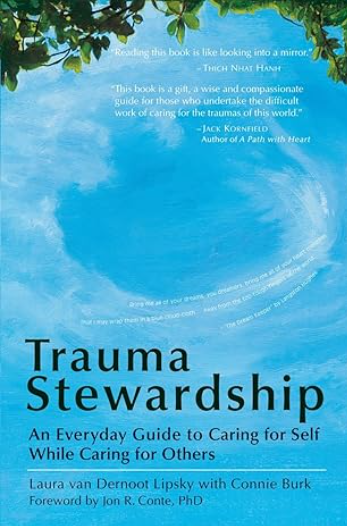
Lipsky, Laura van Dernoot with Connie Burk, Trauma Stewardship: An Everyday Guide to Caring for Self While Caring for Others. Oakland: Berrett-Koehler, 2009.

Stevenson, Bryan. Just Mercy: A Story of Justice and Redemption. New York: One World, 2014. ISBN: 0812994523 or 978-0812994520

Menakem, Resmaa. My Grandmother’s Hands: Racialized Trauma and the Pathway to Mending Our Hearts and Bodies. Las Vegas: Central Recovery, 2017.ISBN: 978-1-942094-47-0

Heumann, Judith, and Kristen Joiner. Being Heumann: An Unrepentant Memoir of a Disability Rights Activist. Boston: Beacon Press, 2020.
"If you focus on the people, the ADA law will manifest itself."
~ Cheryl Ann Frazier, CEO, HCC

ADA Consulting Firm
"Where Humanity Leads, Justice Follows."
- Cheryl Ann Frazier, CEO

Explore Our Website
Humanity Consideration Consultants, LLC © 2026
ADA Consulting Firm
"If you focus on the people, the ADA law will manifest itself."
- Cheryl Ann Frazier, CEO
Humanity Consideration Consultants, LLC © 2026